The MCA debt relief industry has produced two dominant solution models. Each one has a compelling pitch. Each one has a fatal flaw. And in every case, that flaw only becomes visible at the worst possible moment—when a creditor stops cooperating, and enforcement begins.
Understanding why these models fail is not an academic exercise. It is the difference between a business that survives MCA distress and one that doesn’t.
Start Your Free Debt Relief Plan Now
Connect with experts who help businesses get back on track.
No obligation. Available same-day.
Two Models. Two Ways to Fail.
The stall-and-save model tells business owners to stop paying and wait while a settlement fund accumulates. The problem is not the theory. It is the timeline. MCA lenders do not wait. Within 30 days of a missed payment, balances accelerate. Within 60 days, lawsuits are filed and accounts are frozen. The settlement fund that was supposed to buy time instead watches from the sidelines while enforcement dismantles the business.
The negotiate-only model promises dramatic payment reductions through lender cooperation. When every creditor agrees, it can work. But MCA lenders are not required to cooperate—and when one refuses, they have immediate legal tools to redirect receivables, freeze accounts and cripple cash flow overnight. The negotiate-only model has no structural answer for that moment. It was never built to have one.
Both models fail for the same reason. They are built around best-case assumptions in a worst-case environment. Neither of them protects the business while the problem is being solved.
Why the Industry Keeps Selling Broken Models
These models persist not because they work but because they are easy to sell and profitable to operate. Stall-and-save firms collect enrollment fees before a single creditor is contacted. Negotiate-only firms earn fees regardless of whether lenders cooperate. Payment-reduction firms close deals on the strength of a number—80 percent—that any firm can promise without attorneys, legal tools or any real ability to protect the business if enforcement begins.
None of these firms carry meaningful liability when enforcement begins. None of them have structural tools to deploy when a creditor refuses. And none of them have a financial incentive to move faster than their fee structure requires.
The business owner absorbs all the risk. The firm collects fees either way.
What Structural Protection Actually Requires
Real MCA distress resolution starts before the first creditor conversation. It starts with insulation—legal and structural safeguards that protect operating accounts, defend receivables and prevent a single aggressive lender from triggering collapse while negotiations are underway.
Without that foundation, every relief strategy is a house of cards. One uncooperative creditor. One UCC 9-406 notice. One account sweep. And everything built on voluntary cooperation falls apart instantly.
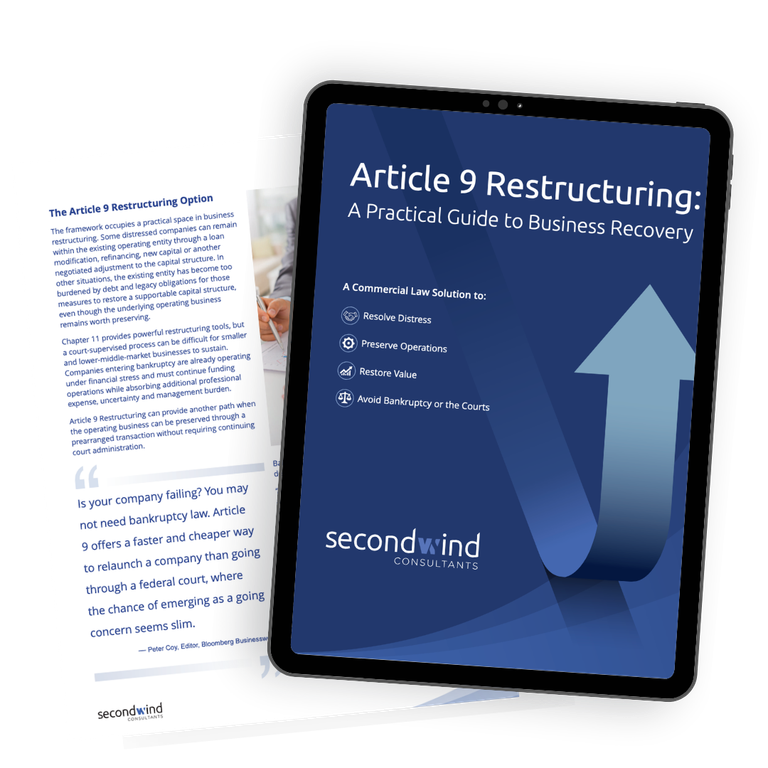
Structural protection means implementing tools—like Article 9 restructuring—that defend the business regardless of creditor behavior. It means cash flow continuity is preserved not because every lender agreed to play nice but because the business is legally insulated from the ones that won’t.
That is the difference between a strategy and a bet.
The RISE Program: Built for the Worst Case, Not the Best
Second Wind Consultants developed the RISE Program—operated through our subsidiary, Rise Alliance—specifically because the industry’s existing models were not designed to protect businesses. They were designed to generate fees.
The RISE Program is built around four pillars: Restructure, Insulate, Strategize and Emerge. Together they create a resolution process that does not depend on perfect lender cooperation, does not leave businesses exposed to enforcement and does not treat resolution as the finish line.
Restructure means creditor negotiations backed by structural safeguards—not phone calls and hope. Insulate means operating accounts and receivables are protected before a single lender is contacted. Strategize means building a path toward sustainable financing, not just surviving the immediate crisis. Emerge means staying engaged through recovery—tracking performance, strengthening operations and ensuring the business never finds itself in this position again.
As the nation’s leading small business restructuring firm with nearly two decades of experience, Second Wind Consultants brings legal infrastructure, a national network of commercial lenders and restructuring attorneys and coordinated expertise that most businesses in distress have never had access to before.
The Question Every Business Owner Should Ask
Before signing with any MCA relief firm, ask one question: what happens when a creditor refuses to cooperate?
If the answer is vague, optimistic or involves waiting to see what happens—walk away. That answer tells you everything about whether the firm is built to protect your business or simply built to collect from it.
You are not failing. You are not out of options. But the window for real protection narrows every time a creditor makes a move. Start with our MCA Debt Relief Guide—it is the clearest available breakdown of how structural protection works and what to demand from any firm you consider trusting with your business.